
Information center / Gynecology / VM Med / Women's health
STI, HPV, and PAP Testing: What is the Difference?

If you’ve ever sat in a doctor’s office wondering what the difference is between a PAP test, an HPV test, and an STI test, you’re not alone. These terms come up frequently in women’s healthcare conversations, often in the same breath, yet they serve very different purposes. Understanding what each test does, what it detects, and when you need one can empower you to take a more active role in your health.
Regular screenings throughout your life are the best way to protect your sexual, gynecological and reproductive health. At VM Med’s Gynecology Centre, our team has a strong commitment to guiding women toward the most up-to-date cervical cancer screening tools available, which increasingly means recommending HPV testing over the traditional PAP test. Here’s everything you need to know.
What is an HPV Test?
Human papillomavirus (HPV) is the most common sexually transmitted infection in the world, and it is responsible for nearly 99% of all cervical cancers. While it’s possible to get cervical cancer without an HPV infection, it’s very rare.
An HPV test checks for the presence of high-risk HPV strains in the cervix that are known to cause cervical cancer. There are over 100 types of HPV, but approximately 14 are classified as “high-risk.” The two highest-risk strains, HPV 16 and HPV 18, are responsible for about 70% of cervical cancers.
HPV testing is recommended for anyone with a cervix, who’s sexually active, starting around the age of 25. Your physician may suggest you get tested earlier depending on any health concerns you are having or on your medical history.
HPV Test vs. PAP Test: What’s the Difference?
| PAP Smear | HPV Test | |
| What it detects | Abnormal cervical cells | High-risk HPV strains |
| Sensitivity | Moderate (~50% – 80%) | High (~90 – 95%) |
| Frequency | Every 2 – 3 years (age 21 – 65) | Every 5 years if negative (age 25+) |
What is a PAP Smear (PAP Test)?
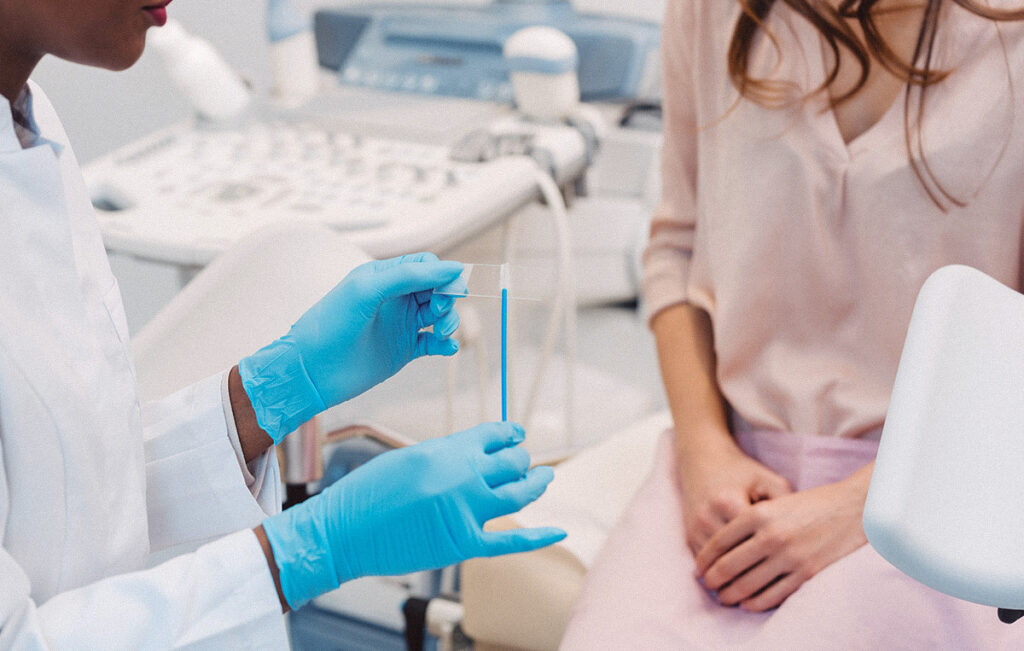
A PAP smear (also called a PAP test or cervical smear) is a screening test for cervical cancer. During a PAP test, cells are gently scraped from the surface of the cervix and examined under a microscope for abnormal changes
An abnormal PAP smear does not mean you have cancer. It simply means that some cervical cells appear unusual. Abnormal results can be caused by:
- HPV infection (the most common cause)
- Inflammation or infection (bacterial or yeast)
- Hormonal changes
- Normal cell changes that will resolve on their own
For years, the PAP test was the standard cervical cancer screening tool, with guidelines recommending testing every 2–3 years for women aged 21–65. However, there is now strong evidence that HPV primary testing is more sensitive, meaning it is better at detecting who is truly at risk of developing cervical cancer.
What is an STI Test?
STI testing is a medical test used to see if you have a sexually transmitted infection (STI) or sexually transmitted disease (STD) transmitted during any type of sexual contact. These are separate tests from PAP smears or HPV tests. An STI panel may screen for:
- Chlamydia
- Gonorrhea
- Syphilis
- HIV
- Herpes (HSV-1 and HSV-2)
- Hepatitis B and C
- Trichomonas
STI tests involve a blood test, urine sample, swab (vaginal, cervical, oral, or anal), or a combination of these, depending on the infections being screened for. The Government of Canada notes that STI rates have been rising in Canada and across age groups. Many STIs have no symptoms at all, which is why regular testing is critical, especially after a new partner or unprotected sex.
HPV itself is an STI, but its cervical health implications are typically detected through a dedicated HPV test, not a standard STI panel. This is why HPV testing is discussed separately below.
Do You Need a Pap Smear If You’re Not Sexually Active?
The short answer is yes.
While HPV is primarily transmitted sexually, cervical cancer screening is still generally recommended for people with a cervix, regardless of sexual activity history. The reason for this is that any close skin-to-skin sexual contact can spread HPV, including anal sex, oral sex, and possibly even deep kissing. The virus can remain dormant in your body, so it’s important to test for its presence.
How often you need to get tested depends on your age and other factors. Smoking, obesity, a weakened immune system, and a family history of the disease all increase your risk of getting cervical cancer.
Aside from cervical cancer, things that can cause an abnormal PAP smear include bacterial infections or the presence of an STI. Occasionally, an abnormal PAP smear result may be due to recent sexual intercourse or menstruation, in which case the test should be retaken.
How to Prevent Cervical Cancer
Cervical cancer prevention is built on three pillars:
- HPV Vaccination: The HPV vaccine (Gardasil 9) protects against the high-risk strains most responsible for cervical, vaginal, vulvar, and anal cancers. It is most effective when given before first sexual exposure, but is recommended up to age 45. In Canada, the vaccine is publicly funded for school-aged adolescents.
- Regular HPV Screening: Starting at age 25 (or as directed by your provider based on history), regular HPV testing is the most effective way to detect early cervical cancer risk.
- Follow-Up After Abnormal Results: An abnormal PAP or positive HPV test is not a diagnosis; it is a flag for follow-up. A colposcopy (a more detailed examination of the cervix) may be recommended to look more closely at any abnormal cells.
According to the Canadian Cancer Society, cervical cancer is one of the only cancers we can eliminate, and it’s almost entirely preventable through HPV vaccination and effective cervical cancer screening.

Why HPV Testing Is Preferable to Pap Tests
Our gynecology team at VM Med strongly encourages women to consider HPV primary testing as their preferred cervical cancer screening method. Here’s why:
- Greater accuracy: HPV testing detects the root cause of cervical cancer, not just the cellular changes that HPV creates. It catches risk earlier, before abnormal cells develop.
- Less frequent testing: A negative HPV test result means you can wait up to 5 years before your next screen, compared to 2–3 years with a PAP test alone.
- Better for all ages: HPV testing is particularly valuable for women 25 and over, offering high sensitivity for detecting early cervical cancer risk.
- Co-testing is available: Some providers offer a PAP and HPV test simultaneously (called co-testing), combining both screenings for maximum information.
HPV testing is increasingly being chosen over traditional PAP tests as a way to screen for cervical cancer risk because it is better at detecting precancerous lesions than PAP tests and therefore more efficient at predicting future cancer risk.
While Pap tests look for cell abnormalities, HPV tests directly detect the high-risk virus that causes 99% of cervical cancers, often years before cell changes occur. Earlier detection means earlier intervention. An NPR interview with the study’s lead author, Dr. Gina Ogilvie explains in more depth why HPV testing can detect precancerous lesions earlier.
VM Med Gynecology Centre
At the VM Med Gynecology Centre, we support every aspect of women’s health throughout life’s stages. From annual exams and cervical screening to contraception, family planning, STI testing, and menopause management, our multidisciplinary team offers comprehensive, personalized care in a welcoming and private environment. No referral is needed.
STI, HPV, and PAP tests in Montreal are available at VM Med’s Gynecology Centre.
Book a Nurse Appointment with Sarah Bachand
At VM Med, you can access cervical health screenings, including PAP tests, HPV testing, and STI panels, through our dedicated gynecology team.
Sarah Bachand is a dedicated obstetrics and gynecology nurse specializing in gynecology at VM Med. She completed her nursing training at Cégep André Laurendeau in 2004 and holds a background in Special Care Counselling from Champlain Regional College. Sarah brings nearly 20 years of clinical experience from LaSalle Hospital, where she worked in diverse departments including maternity, surgery, and colposcopy. Her expertise focuses on women’s health, including contraception, menopause management, and pregnancy follow-up. Sarah is also a published author and a collaborator on clinical nursing publications.
Booking a nurse appointment with Sarah is a fast, accessible, and judgment-free way to take control of your cervical and sexual health. Contact us to schedule your appointment.
Additional Resources
For more information, explore our VM Med blogs, including: STI Testing: When to Get Tested and Why or Women Need to Prioritize Their Own Gynecological Health.
Still have questions? Book a consultation with our experts. We support every aspect of our patients’ health throughout the course of their lives.
Categories
