
Information center / Gynecology / Monthly Spotlight / Prevention / Science / VM Med / Women's health
Is It Endometriosis or Period Pain? How to Tell the Difference
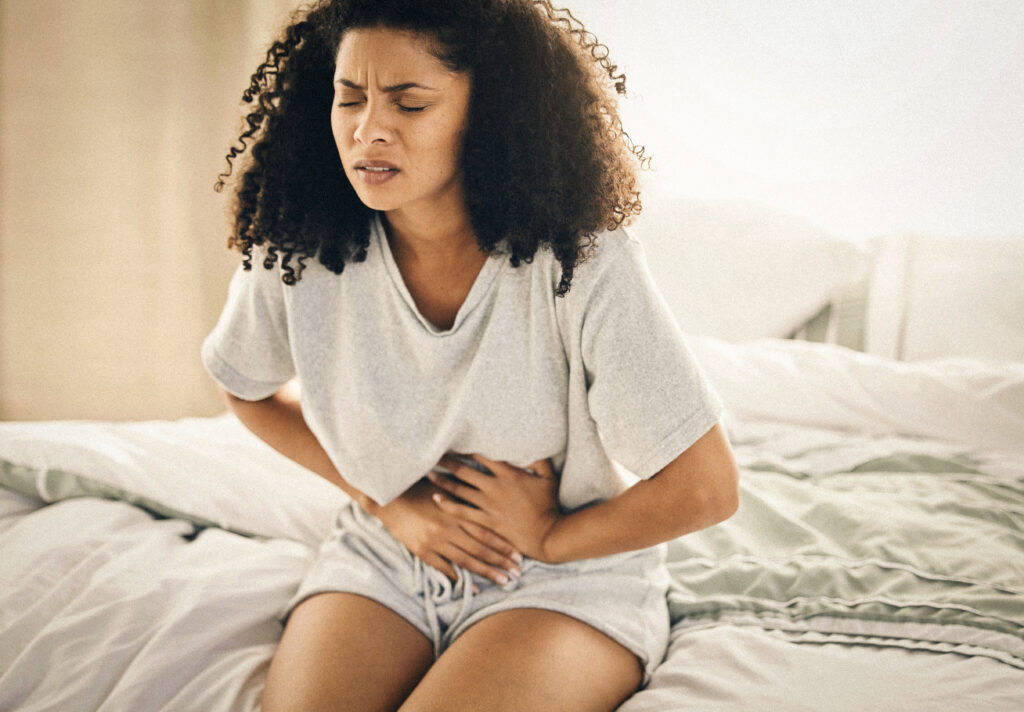
(Tina Dawn/ VM Med) — Menstruation and the discomfort that routinely comes with it are a common part of many individuals’ monthly cycles. In fact, painful periods are so widespread that there’s a medical term for them: dysmenorrhea. This everyday period pain is usually accompanied by uterine cramps, as well as transient symptoms like lower back pain, headaches, mild nausea, or changes in bowel movements during your period.
However, it is crucial to note that severe, debilitating pain related to menstruation is NOT normal. While mild cramping is common, pain that interferes with your daily life, work, or school is a signal that something requires medical evaluation.
Because severe pain is so frequently normalized by society, chronic conditions are often minimized or dismissed as “just bad period cramps.” This leads to delays in care. In Canada, for example, it takes an average of seven to ten years for a patient to receive a definitive diagnosis for pelvic health disorders. Understanding the differences between typical menstrual discomfort and chronic conditions is the first step toward getting proper treatment.
Period Pain vs. Premenstrual Syndrome (PMS)
It is also helpful to distinguish period pain from premenstrual syndrome (PMS). While period pain typically occurs just before and during menstruation, PMS is a combination of physical and emotional symptoms (such as mood swings, breast tenderness, and bloating) that starts one to two weeks before your period begins and generally subsides once bleeding starts.
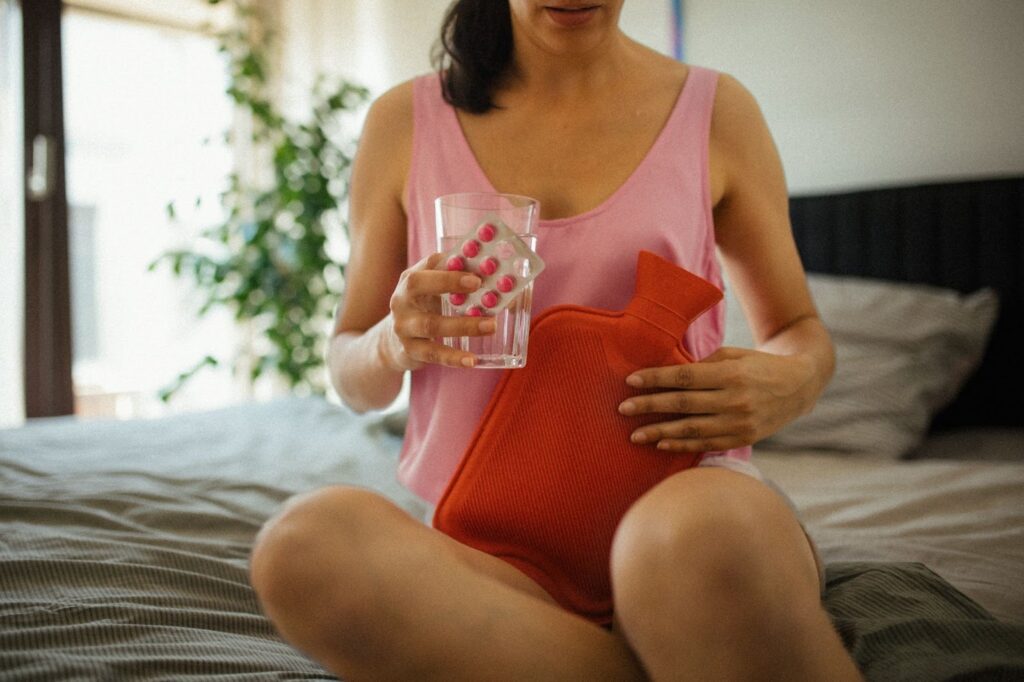
What is Endometriosis
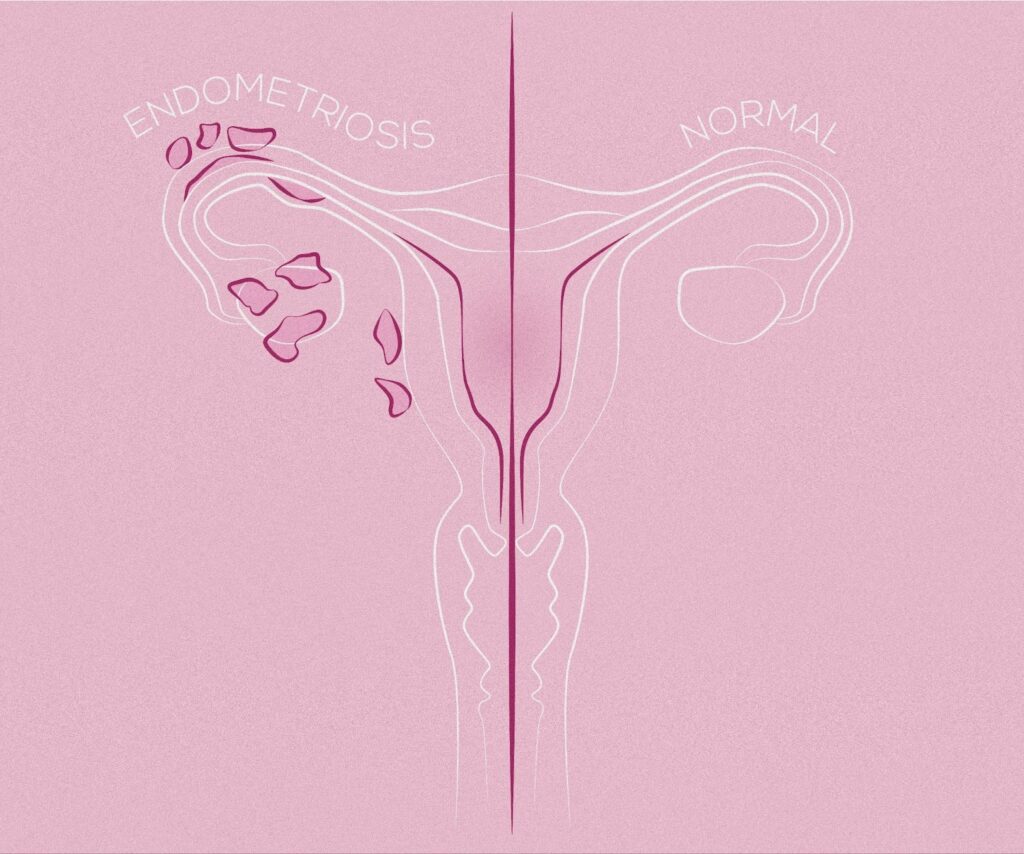
Endometriosis is not merely a gynecological issue; it is a complex, chronic, systemic, and inflammatory disease. It occurs when tissue similar to the lining of the uterus (endometrial-like tissue) grows outside of the uterus.
This tissue behaves like the uterine lining but with no way to exit the body, it causes chronic inflammation, deep pelvic pain, internal scarring (adhesions), and infertility.
While it is most commonly found on the pelvic organs (such as the ovaries, fallopian tubes, and the outer surface of the uterus), endometriosis lesions can actually be found throughout the entire body, including the gastrointestinal tract, the bladder, and, in rarer systemic cases, beyond the diaphragm. It affects roughly 10% of women and unassigned females globally, and symptoms can manifest at any age, not just during prime childbearing years.
Common Symptoms of Endometriosis
According to John Hopkins Medicine, there are five common symptoms of endometriosis. However, because endometriosis is a systemic inflammatory condition, its symptoms can certainly go beyond these 5. Common symptoms of endometriosis are:
- Severe pelvic pain
- Painful intercourse
- Painful periods
- Heavy menstrual bleeding
- Pain with urination and/or bowel movements
- Infertility
Understanding the Stages of Endometriosis
Endometriosis is typically classified into four medical stages based on the location, depth, and amount of the tissue and scar tissue:
- Stage 1: Minimal
- Stage 2: Mild
- Stage 3: Moderate
- Stage 4: Severe
It is a common misconception that the stage of the disease correlates with the amount of pain a person feels. The level of endometriosis pain is completely unrelated to the severity or stage of the disease. A person can have Stage 1 (minimal superficial lesions) and experience agonizing, localized nerve pain, while someone else can have Stage 4 (involving deep infiltrating lesions that bind organs together, or “chocolate cysts” known as endometriomas on the ovaries) and experience very few symptoms, a phenomenon known as “silent endometriosis.”
While Stage 4 endometriosis is associated with a higher risk of anatomical distortions that impact fertility, many individuals with advanced stages of the disease can still successfully achieve pregnancy.
Adenomyosis vs Endometriosis
While both adenomyosis and endometriosis are painful progressive disorders involving endometrial tissue, they are distinct conditions located in different locations of the body and should be understood as separate. In some cases, women may suffer from both disorders.
The main difference: In adenomyosis, cells grow inside the muscular wall of the uterus, causing the inside of your womb to get thicker and bigger. Endometriosis, on the other hand, occurs outside the uterus (the ovaries, for example).
Common Symptoms of Adenomyosis
- Severe, heavy, and prolonged menstrual bleeding
- Passing large blood clots during your period
- Chronic, grinding pelvic pain
- Painful intercourse
- An enlarged, tender uterus (which a doctor may note during a pelvic exam)
Endometriosis vs Polyendocrine Metabolic Ovarian Syndrome – (previously known as Polycystic Ovary Syndrome or PCOS)
Another condition frequently discussed alongside endometriosis is Polycystic Metabolic Ovarian Syndrome (PMOS), historically referred to as PCOS. While both are endocrine (hormonal) disorders that impact the menstrual cycle, they have entirely different mechanisms.
PMOS is primarily a metabolic and hormonal disorder characterized by elevated levels of androgens (male hormones) and insulin resistance, which disrupts ovulation. Rather than causing the severe, inflammatory tissue pain characteristic of endometriosis, PMOS typically presents with:
- Missed, irregular, or entirely absent periods
- Excessive facial or body hair (hirsutism)
- Severe acne and oily skin
- Weight gain or difficulty losing weight
- Male-pattern hair thinning
While both conditions can cause menstrual irregularities and impact fertility, they require entirely separate treatment pathways.
Management and Support

There is currently no known cure for endometriosis or adenomyosis, but an early, accurate diagnosis allows for a highly customized management strategy to protect your quality of life. Treatment is never “one-size-fits-all” and may include:
- Medical Management: Hormonal therapies to suppress the cycle or pain-management medications to control systemic inflammation.
- Surgical Interventions: Laparoscopic excision surgery (cutting the lesions out from the root) performed by a skilled specialist is the most effective standard for removing tissue, though lesions can still recur.
- Dietary and Lifestyle Changes: While diet cannot cure a cellular disease, embracing an anti-inflammatory diet (such as reducing heavily processed foods, refined sugars, or personal triggers like gluten or dairy) can significantly alleviate systemic inflammatory symptoms. A recent medical study found that a change in one’s diet could help reduce symptoms.
Why Proper Diagnosis and Treatment are Important
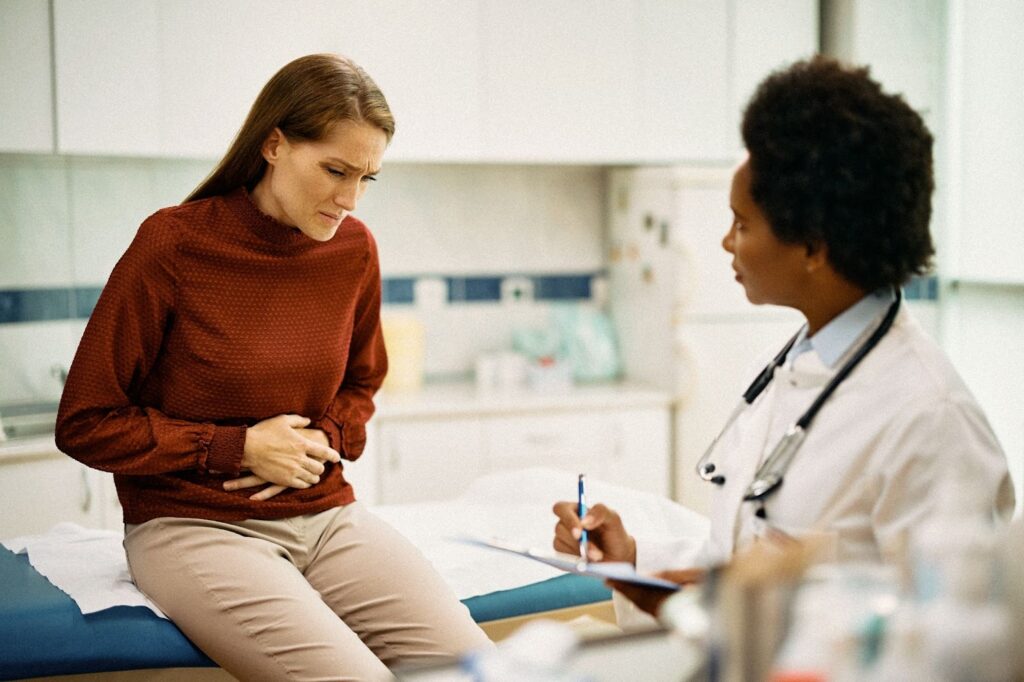
Because of how complex and varied symptoms can be, as well as how endometriosis often mimics other gynecological conditions, it requires the specialized care of a gynecology centre and doctors that can both properly diagnose and treat the condition.
Historically, a surgical procedure called a laparoscopy, where a doctor inserts a tiny camera into the abdomen to visualize and biopsy tissue, was considered the only way to confirm endometriosis. While a laparoscopic biopsy remains the definitive gold standard for absolute histological confirmation, advanced imaging has evolved significantly. Highly specialized pelvic mapping ultrasounds and targeted MRIs interpreted by skilled technicians can now reliably identify deep infiltrating endometriosis, adenomyosis, and endometriomas without immediate surgery.
VM Med Gynecology Centre
At the VM Med Gynecology Center, we are committed to supporting every aspect of women’s health throughout life’s stages. In a welcoming and compassionate environment, our team provides specialized counselling and treatments for a wide range of concerns—including menstruation, menopause, hormonal imbalances, sexually transmitted infections, and both benign and malignant gynecological conditions.
During your consultation, your physician will take the time to listen to your concerns, perform any necessary examinations, and recommend additional services when appropriate. Our centre offers comprehensive care, from annual exams and cervical screening to contraception, family planning, and menopause management. We also provide specialized clinics for conditions such as vulvodynia, vaginismus, and vulvar skin disorders, as well as advanced procedures including colposcopy, hysteroscopy, minimally invasive surgeries, and innovative treatments like MonaLisa Touch and platelet-rich plasma therapy.
The Expertise of Dr. Lorraine Dontigny
Dr. Lorraine Dontigny (M.D., F.R.C.S. (C) is an Obstetrician-Gynecologist at VM Med. Her expertise lies in general gynecology, with a special focus on genitourinary syndrome in postmenopausal women. She completed her medical training and residency at l’Université de Montréal. From 2000 until 2022, Dr. Dontigny was a valuable member of the LaSalle Hospital’s obstetrics and gynecology team in Montreal, and an assistant professor at McGill University and l’Université de Montréal. Dr. Dontigny performs a number of procedures, including colposcopy, hysterosonography as well as the unique MonaLisa Fractional CO2 Laser Therapy.
Additional Resources
For more information, you can read our extensive archive of VM Med blogs, including Why Annual Checkups Matter: The Power of Preventive Care or How The Thyroid Impacts Women, Hormones, and Menstruation.
Still have questions? Book a consultation with our experts. We support every aspect of our patients’ health throughout the course of their lives.
Categories
